More than half of mature Greek hotel investment projects have failed to secure financing, the head of Greece’s national hoteliers’ federation said, warning that a selective and increasingly cautious tourism market is straining the sector despite record arrivals.
By Lyto Mysiakouli
Yannis Hatzis, president of the Panhellenic Federation of Hoteliers, told iefimerida in an interview that the shortfall stemmed largely from a disputed reallocation of Recovery Fund resources, calling it “a real shame” that projects already positively evaluated remain stalled.
He said the fallout extends beyond tourism to local economies, employment and public revenue, and expressed hope that hoteliers could complete the projects through bank financing or a new support mechanism even without Recovery Fund backing.
Mr. Hatzis said this year’s season is marked by greater uncertainty, slower bookings, heavier reliance on last-minute travel and increased price sensitivity, making it harder for businesses to raise rates without denting demand.
While international air arrivals are up 4% overall, he said the performance varies sharply by destination: Athens, Thessaloniki, Chania, Corfu and Heraklion are performing strongly, while Kos and Mytilene are declining and Santorini is operating at notably low levels. Even Rhodes, though still positive, is not growing as robustly as expected.
Mr. Hatzis identified Crete’s Kasteli airport and the BOAK highway project as potential catalysts for growth, while saying mature destinations like Rhodes, Kos and Corfu need upgraded accommodation offerings.
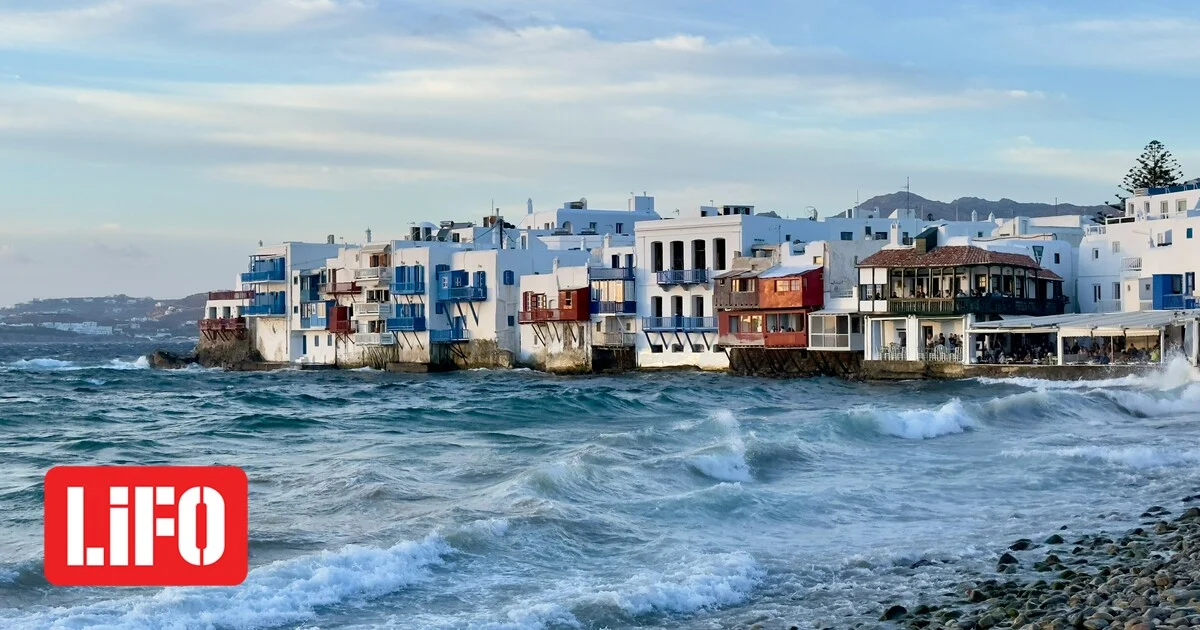
He said Santorini and Mykonos require better protection and management of their international brand appeal rather than further expansion.
On competitiveness, Mr. Hatzis pointed to accumulating indirect taxes and fees — including a climate resilience levy, elevated VAT and rising municipal charges — as bigger threats to Greek hotels than energy costs alone, citing a joint INSETE-PwC analysis calling for a fairer regulatory framework.
Addressing why many Greeks struggle to afford domestic holidays, Mr. Hatzis cited limited household purchasing power, the concentration of local demand in August — when roughly 32% of Greeks travel, compared with 12% across Europe — and a preference for high-demand destinations where peak prices are naturally higher. He said competitively priced options remain available outside peak periods.
He also flagged Greece’s heavy reliance on German and British visitors as a vulnerability requiring greater market diversification.