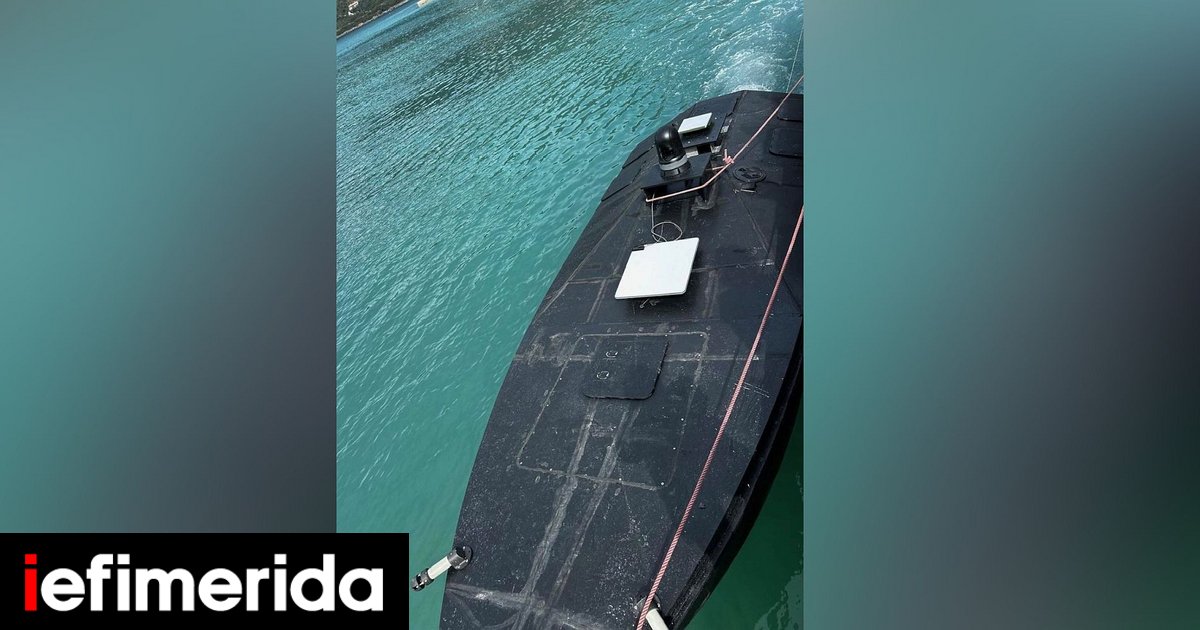
Leading defense analysts warn that the discovery of an explosive-laden Ukrainian sea drone off the island of Lefkada signals a “dangerous expansion” of the Black Sea conflict into the Mediterranean, reshaping the regional landscape of maritime security.
The unmanned surface vehicle (USV), identified by Greek military experts as a Ukrainian “Cossack Mamai” or Magura-type strike craft, was found drifting with its engine running in a secluded cove last week.
Minister of National Defense Nikos Dendias officially confirmed the drone’s Ukrainian origin in Brussels on Tuesday, describing the presence of the “kamikaze” vessel as an “extremely serious” threat to international navigation.
“This is no longer a localized conflict; we are seeing the transfer of hybrid naval warfare into NATO’s southern flank,” said retired Lieutenant General Ioannis Baltzoi, president of the Hellenic Institute for Strategic Studies.
Mr. Baltzoi noted that the drone, capable of reaching speeds of 110 km/h (68 mph), likely targeted Russian “shadow fleet” tankers transiting the Mediterranean before losing operator control and drifting toward Greek tourist waters.
Technical analysis of the vessel’s GPS metadata and serial numbers is expected to be finalized by Friday.
Greek investigators are probing whether the drone was launched from a “mother ship” or a clandestine facility in North Africa.
Foreign Minister George Gerapetritis confirmed that Athens will file a formal diplomatic démarche to Kyiv once the forensic report is complete.
“Greece will not allow the Mediterranean to become a theater of military operations,” Mr. Dendias stated, emphasizing that the incident highlights a critical “grey zone” in maritime surveillance.
Analysts warn that such low-signature asymmetric threats are difficult to detect, necessitating a rapid update to Greece’s naval deterrence doctrines in the Ionian Sea.
By Irene Hatzoglou